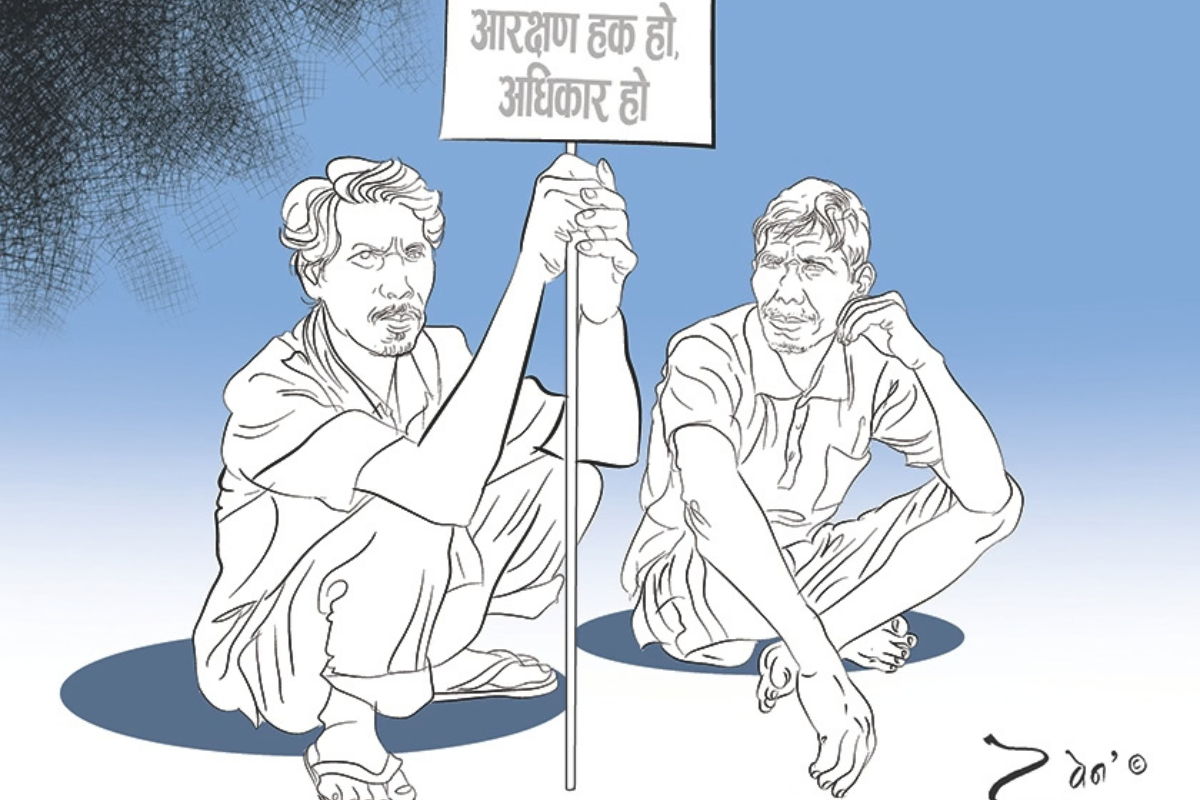





Following the promulgation of Nepal’s Interim Constitution in 2007, the second amendment to the Civil Service Act, 2049 BS, introduced a reservation system in the civil service. Reservation provisions have also been implemented, in one form or another, in the army, police, teaching profession and other public services. After the promulgation of the Constitution of Nepal in 2015, the country adopted federalism, leading to the formation of local and provincial governments.
The second amendment to the Civil Service Act, 2049 BS, sought to make the civil service more inclusive by setting aside 45 percent of positions filled through open competition for reservation. That 45 percent was treated as 100 percent and distributed among six groups: women 33 percent, Indigenous nationalities 27 percent, Madhesis 22 percent, Dalits 9 percent, persons with disabilities 5 percent and people from backward regions 4 percent.
The National Inclusion Commission prepared the “Study Report on the Impact of Reservation in Existing Government Services, 2079 BS.” The commission studied the impact of reservation in the civil and health services from its introduction until the end of Ashadh 2078 BS. According to the report, 39,979 people had been recommended for appointment by the end of Ashadh 2078 BS, including 25,023 through open competition and 14,956 through reservation. Of those recommended through reservation, 5,160 were women, 4,057 were Indigenous nationalities, 3,199 were Madhesis, 1,308 were Dalits, 698 were persons with disabilities and 534 were from backward regions. Based on its study, the commission assessed both the positive and negative impacts of reservation and made various recommendations to the government.
The basic principle of inclusion is that at least 45 percent of positions in public services should be filled from the six designated groups. The Inclusion Commission’s report projects that by 2093 BS, 45 percent of the workforce will have entered through reservation and recommends abolishing the system thereafter.
Those who support reservation argue that it has gradually reduced discrimination against historically excluded groups and helped strengthen them economically and socially, and therefore should not be abolished. Those who oppose it argue that reservation has weakened the merit-based system, created widespread dissatisfaction among people outside the reserved groups and could generate social conflict in the future, and therefore should be removed as soon as possible.
Positive Discrimination and the Merit System
In reality, the reservation system also provides positive discrimination in favor of people belonging to the reserved groups. For example, suppose a Madhesi candidate belongs to a reserved category. If 100 positions are advertised, that candidate can compete for the 55 open positions as well as 22 percent of the 45 reserved positions, amounting to 10 additional positions. In total, the candidate can compete for 65 positions. The candidate cannot compete for the remaining 35 reserved positions designated for other groups.
Thus, positive discrimination also applies to candidates from reserved groups; the main difference is that they do not have to compete with everyone for the positions specifically allocated to their group.
The difference in examination scores between candidates recommended through open competition and those recommended through different reservation categories has frequently been cited as evidence that reservation weakens the merit-based system.
One possible solution would be to analyze the scores obtained by candidates recommended through open competition in each recruitment cycle and establish a minimum score required for recommendation under the reserved categories. A candidate who ranks first in a Public Service Commission examination is not necessarily more qualified in every respect than the candidate who ranks second.
Therefore, if a minimum qualifying score were established for candidates recommended through reservation—for example, requiring them to obtain at least 80 percent of the score achieved by the candidate last recommended through open competition—reservation would not necessarily undermine the merit-based system.
The report also provides details of women and candidates from other groups being recommended through open competition. When candidates from reserved groups are recommended through both open competition and reservation, the competitive space available to Khas-Arya candidates in the open category appears to be narrowing.
One possible approach would be either to reserve a certain percentage of open positions for Khas-Arya candidates or to allocate some percentage of positions to them as a separate reserved category.
Why Is Reservation Necessary ?
The question of why reservation is necessary is also frequently raised. Before the reservation system was introduced, the presence of people belonging to the reserved groups in public services was extremely low.
It may be argued that they did not pursue education or did not meet the required qualifications. But how can it be claimed that significant sections of the country’s population simply did not want to enter public service or were unable to meet the qualifications? And how can the historical discrimination they faced be denied?
Public service is, after all, about serving the people and requires coordination with people from different castes, communities and cultures. For example, if a government office is working in an area predominantly inhabited by an Indigenous community, having a significant number of Indigenous employees can make the office’s work more effective from various perspectives.
Misuse and Verification of Reservation
Under the current system, when a candidate belongs to a reserved category, the recommendation by the District Administration Office identifies the relevant category. Whether someone belongs to a particular reserved group is often determined by their surname.
The report notes that some people have benefited from reservation by misrepresenting, changing or concealing their surnames. In particular, some women have reportedly used surnames before and after marriage in ways that allow them to qualify for reservation benefits.
It would be appropriate to require applicants to make a declaration that anyone proven to have falsified or concealed their surname would be dismissed unconditionally from public service and subjected to legal action. The identification of groups based on surnames should also be made scientifically.
The report further notes instances in which people who do not qualify for the categories of persons with disabilities or backward regions have received reservation benefits. Such problems should be addressed in accordance with the solutions recommended by the report.
The law states that people belonging to the six reserved groups should also be socially and economically disadvantaged, but it does not clearly define who qualifies as disadvantaged. In reality, reservation is intended for communities, not specifically for the rich or poor.
There is also an argument that members of elite groups within the reserved communities repeatedly benefit from reservation. The report states that Yadav, Sah, Chaudhary and Mahato candidates account for 50.64 percent of recommendations among Madhesis; Chaudhary, Shrestha and Rai account for 38.92 percent among Indigenous nationalities; Bik, Nepali and Bishwakarma account for 37.47 percent among Dalits; while Joshi, Budha, Shah, Upadhyay and Thapa account for 27.34 percent in the backward-region category.
These figures suggest that reservation recommendations are concentrated among certain surnames. However, bringing socially and economically disadvantaged people into the reservation system should not come at the expense of the merit-based system.
First, there needs to be a clear definition and identification of who qualifies as socially and economically disadvantaged. Second, empowerment programs should be introduced to enable such candidates to compete with groups considered socially privileged.
As recommended by the report, targeted Public Service Commission preparation classes should be conducted for disadvantaged groups. Other measures could include waiving application fees for public service examinations, providing special educational support and encouraging people to enter public service.
The concentration of recommendations among certain surnames should be analyzed, and an appropriate policy of positive discrimination should be adopted.
Different Provincial Models
The Civil Service Act enacted by Madhes Province allocates 49 percent of all positions for reservation. Of the reserved positions, 54 percent are allocated to Madhesis, 17 percent to Dalits, 6 percent to Indigenous nationalities and 5 percent to Tharus, with 50 percent of positions within each group reserved for women.
Similarly, the Civil Service Act of Sudurpaschim Province allocates 45 percent of positions for reservation. Of these, 33 percent are allocated to women, 14 percent to Dalits, 13 percent to Rana Tharus, 11 percent to economically disadvantaged Khas-Aryas and 10 percent to Indigenous nationalities. It also provides for 50 percent representation for women within each group.
Karnali Province has allocated 45 percent of positions for reservation, with 45 percent of the reserved quota going to Khas-Aryas, 22 percent to Dalits, 12 percent to Indigenous nationalities and 12 percent to people from backward regions. Women are allocated 33 percent within each group.
An analysis of these figures shows that the provinces have allocated reservation percentages largely on the basis of the population composition of their respective provinces. As a result, a candidate from one province may not qualify for a reservation category in another province.
Therefore, reservation provisions in the federal and provincial civil services should be uniform. The law also provides for a review of the reservation system every 10 years, but such a review has not yet taken place and should now be conducted.
The data on candidates recommended through both open competition and reservation in various public services should be analyzed from multiple perspectives. Based on that analysis, it should be determined what percentage of positions should be reserved, which groups should be included and what proportion should be allocated to each group.
Once a person has entered public service through a reservation category, it would not be equitable to allow that person to repeatedly benefit from reservation in subsequent opportunities.
Women should not necessarily be treated as a separate reservation category. Instead, 50 percent of positions within each reserved group should be allocated to women. This would create opportunities for women across all communities.
Opinion by Sibesh Kumar Singh, published online by Gorkhapatra on 30 Ashadh 2081 BS (July 14, 2024).
 The Reservation Debate and Social Media Discourse
  The Meaning of Reservation
 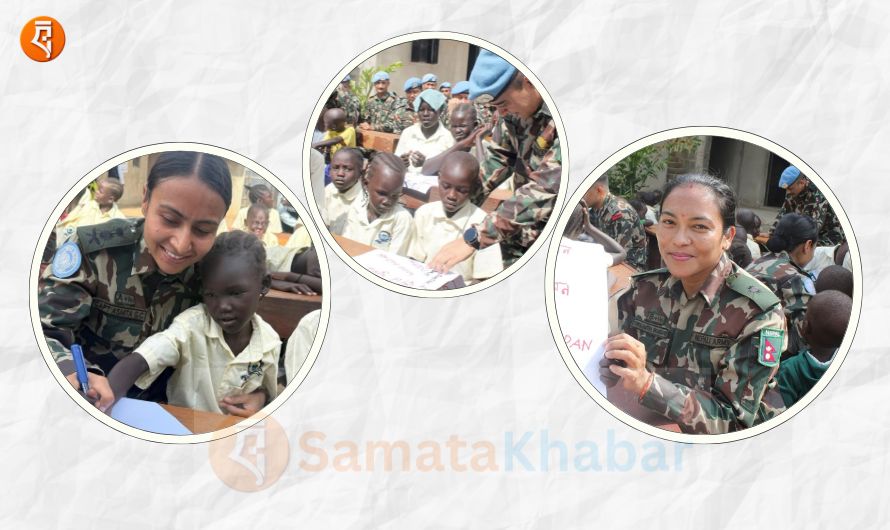 Creative Initiative by Nepali Peacekeepers in South Sudan