




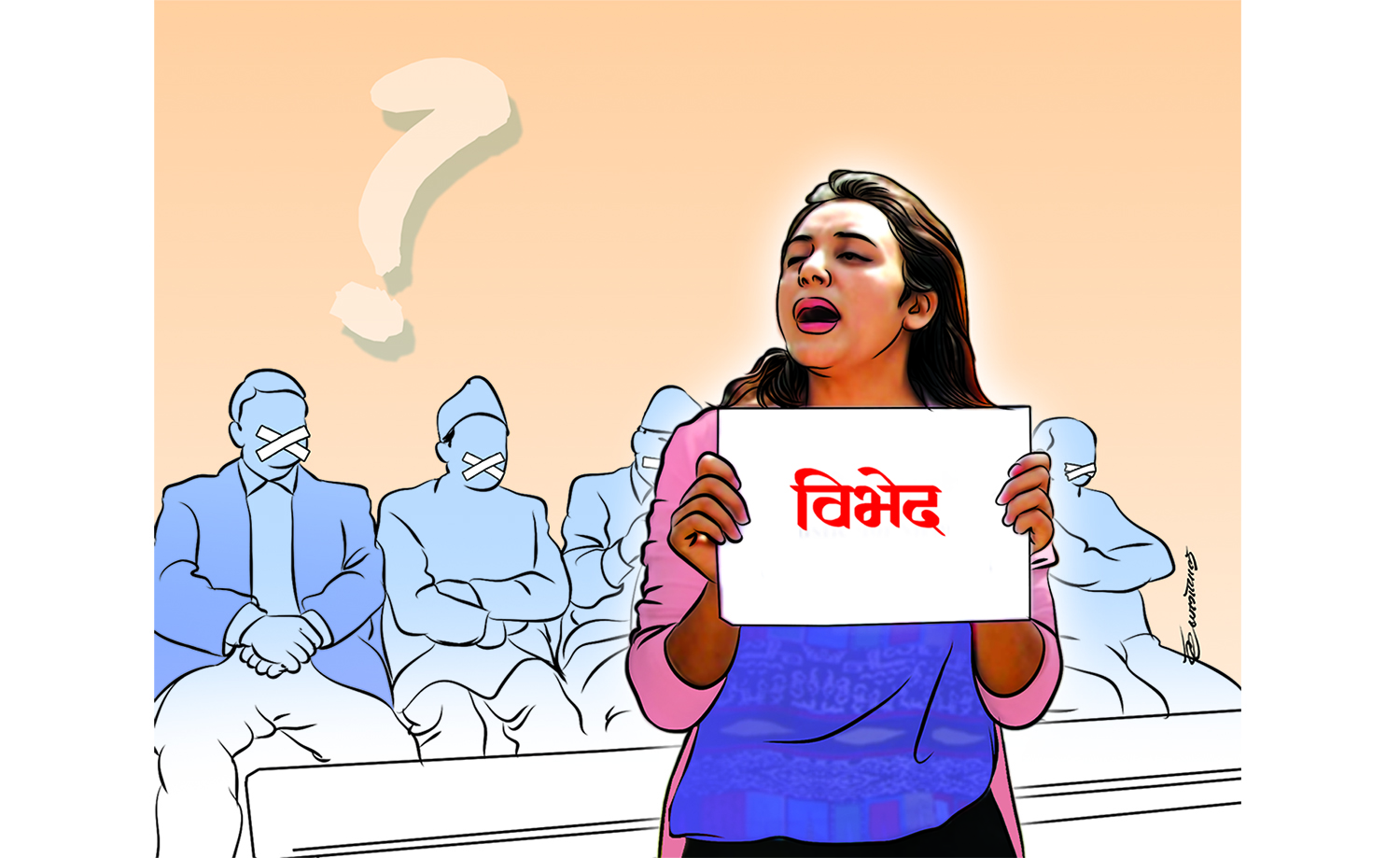
The argument that the word “Dalit” should be removed from the Constitution is not only anti-Dalit; it is also contrary to the fundamental principles of human rights.
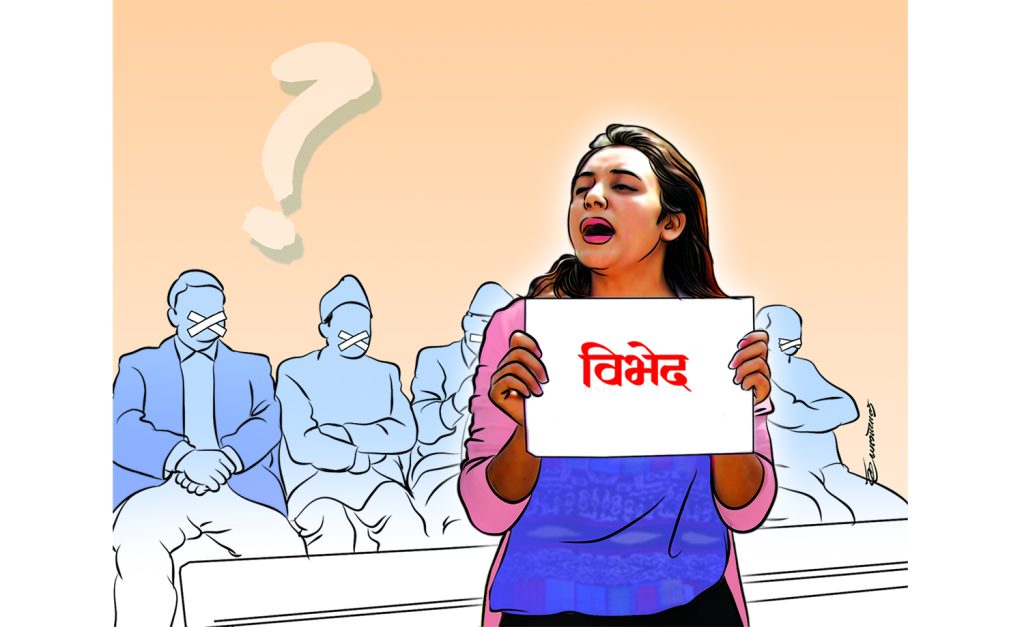
The relevance of the term “Dalit” and the issue of internal discrimination within the Dalit community have recently become prominent subjects of debate in discussions on Dalit rights. There is even discussion about whether the word “Dalit” should be retained in the Constitution, laws and legal provisions if constitutional amendments are undertaken. Some Dalit rights activists themselves have proposed alternatives to the term and launched debates and campaigns around the issue. At the same time, discrimination and untouchability within the Dalit community have also received considerable attention. This article attempts to examine how the collective identity, rights and unity of an oppressed community should be understood as a whole.
There are essentially two perspectives on the relevance of the term “Dalit.” Some argue: Why should people call themselves Dalit in the 21st century? Why should they continue to identify themselves with a term associated with humiliation? If people continue to use the term Dalit, they argue, the younger generation will also inherit the discrimination of the past. Therefore, the word “Dalit” should be removed from both the Constitution and the dictionary.
Those who hold such views are often among those who oppose granting rights to Dalits. There is a calculated element to this argument. Whether a community is granted rights, or whether it can claim rights, depends on its identity, population and social condition. If the identity and numerical presence of a community are erased, its actual condition can no longer be properly established. Once that happens, there remains no clear basis or evidence for the state to provide rights or for the community to demand them.
Opportunities occasionally granted through the goodwill or favor of a ruler are a separate matter. A similar approach was seen during King Mahendra’s rule, when Nepal’s multicultural and multilingual character was obscured by the claim that there were no castes in Nepal and that there were only two categories: men and women. In a democratic system, the argument that the word “Dalit” should be removed from the Constitution follows a similar pattern.
Such an argument is not merely anti-Dalit; it is also contrary to the fundamental principles of human rights. Erasing someone’s identity and depriving them of their rights are acts incompatible with human rights. Claiming that discrimination can be eliminated by distorting or concealing the country’s history and the actual condition of society from the younger generation is nothing more than an unrealistic proposition.
The Question of an Alternative to “Dalit”
Another perspective has been advanced by some Dalit rights activists who argue that the word “Dalit” is not dignified and that an alternative should therefore be found.
What needs to be made clear is that collective identity is not established simply because people happen to prefer a particular term. It is generally shaped and established through historical movements and campaigns. The question of which term is appropriate in a movement for rights and social awakening is not like deciding which piece of jewelry suits an individual.
The term “Dalit” emerged through a long historical struggle for collective identity. It is therefore appropriate to understand and embrace the term within that historical legacy. In Nepal, the term Dalit appears to have been used by Dalit activists and pioneers since 2011 BS. Since the formation of the “National Dalit Janabikas Parishad” in 2024 BS with the term Dalit in its name, the word has increasingly become an institutional and unifying identity for the Dalit movement.
This demonstrates, as analyst Ahuti has argued, that the term Dalit was not a name imposed by others to demean the community.
Therefore, the argument advanced by some populist Dalit rights activists today that an alternative should be found simply because they no longer like the term or feel that it is humiliating does not appear convincing. It is well known who defined the term Dalit in dictionaries in the past, and from what perspective. The meaning assigned to the term in dictionaries was clearly influenced by non-Dalit interpretations that carried a derogatory connotation.
The dictionary definition can certainly be revised. But claiming that Dalits will gain dignity merely by replacing the word itself is to divert attention from the central issues of the Dalit movement.
Suppose the word “poor” became regarded as insulting and poor people were therefore called “rich.” Would changing the words used to describe those who possess wealth and those who do not actually change society’s attitudes and treatment toward poor people?
The same logic applies to the search for a supposedly more respectful alternative to the term Dalit. Ultimately, it amounts largely to changing the terminology used to distinguish between social groups. Therefore, Dalit rights activists would be more effective if they devoted their time and resources to substantive issues concerning Dalit rights.
Internal Discrimination Within the Dalit Community
Another important issue is discrimination and untouchability within the Dalit community itself.
Many argue that internal discrimination among Dalits must first be eliminated before caste-based untouchability can be abolished in society. There is also a significant group of people who claim that caste-based discrimination cannot end until Dalits stop discriminating against other Dalits.
More surprisingly, some elected representatives have publicly expressed the view that discrimination exists within the Dalit community and that it must first be eliminated before caste discrimination in the wider society can be addressed.
Internal discrimination has long been a concern for Dalit rights activists. There is no doubt that caste-based discrimination and untouchability within the Dalit community must end and that Dalits themselves must take responsibility for addressing the problem.
However, arguing that discrimination and untouchability against Dalits by non-Dalits is somehow justified because discrimination also exists within the Dalit community, or that raising the issue of Dalit rights is meaningless until internal discrimination is eliminated, is an extremely irresponsible and reactionary way of thinking.
This becomes clearer when examined from theoretical and historical perspectives.
The Roots of Caste Discrimination
Caste-based untouchability and discrimination in society are products of the Brahmanical worldview rooted in the Hindu varna system. Brahmanism is not an insult directed at any particular caste; rather, it refers to a discriminatory ideology and system of thought based on the Hindu varna order.
Historically, those regarded as belonging to the highest caste appear to have promoted this system in society to protect their own interests. They extended such ideas beyond their own communities and sought to strengthen their position by embedding them throughout society as religion, tradition and social practice.
Brahmanical ideas and practices are not found only among non-Dalits; they are also present within Dalit communities. They constitute a harmful social practice rooted in superstition and deeply entrenched customs.
The effects of any harmful social practice tend to be greatest among people at the lowest levels of society, and belief in such practices can also become particularly strong there.
Brahmanical thought and social structures have contributed to widespread poverty and lack of education among Dalits. The situation was even more severe in the past. Where poverty and illiteracy are widespread, harmful social practices tend to leave deeper imprints.
In some places, discrimination by Dalits against other Dalits can even be more severe than discrimination against Dalits by educated non-Dalits.
It is impossible to eliminate internal discrimination among Dalits alone without addressing and ultimately ending the broader Brahmanical worldview based on the Hindu varna system throughout society.
Therefore, it is not logical to claim that discrimination by non-Dalits against Dalits will end only after discrimination within the Dalit community has been eliminated.
No democratic system in the world conditions the rights of an oppressed group on that group first improving or correcting itself. Nor is such a condition possible.
Can anything be achieved only after everyone within a particular group becomes completely united? Would it be just to say that women’s rights can be secured only after all women unite, that poverty-alleviation programs should be implemented only after all poor people unite, or that the rights of Indigenous communities should be guaranteed only after all Indigenous people become united?
Likewise, the argument that discrimination by non-Dalits against Dalits can end only after untouchability within the Dalit community is eliminated is itself discriminatory and resistant to social change.
This does not mean that internal discrimination within the Dalit community should be ignored. Rather, strengthening Dalit rights is essential to eliminating such discrimination.
Debates, advocacy, movements and campaigns related to Dalit rights, as well as policies and programs, should simultaneously address both internal and external forms of discrimination.
Beyond the Question of Terminology
Ultimately, the problems faced by Dalits are not merely Dalit issues; they are obstacles to the country’s overall economic and social development.
Rather than becoming trapped in debates over terminology and identity alone, Dalits and all communities committed to social justice need to take the lead in ending caste-based discrimination and untouchability at every level of society.
The state must respect the historical identity of Dalits and give the highest priority to ending all forms of discrimination and inequality against Dalits, who remain among the most oppressed communities in society.
Srijana Bishwakarma is the National Project Coordinator of the Feminist Dalit Organization (FEDO).
Published in Naya Patrika on Magh 13, 2081 BS (January 26, 2025).
 DNA Samples to Be Collected From Families of Missing Foreign Nationals
  Dalit Identity and the Puzzle of Internal Discrimination
  Arguments For and Against Reservation
  The Reservation Debate and Social Media Discourse
  Deuba: Narrative that Nothing Was Achieved in 35 Years Is Not Based on Facts
  A Life of Family