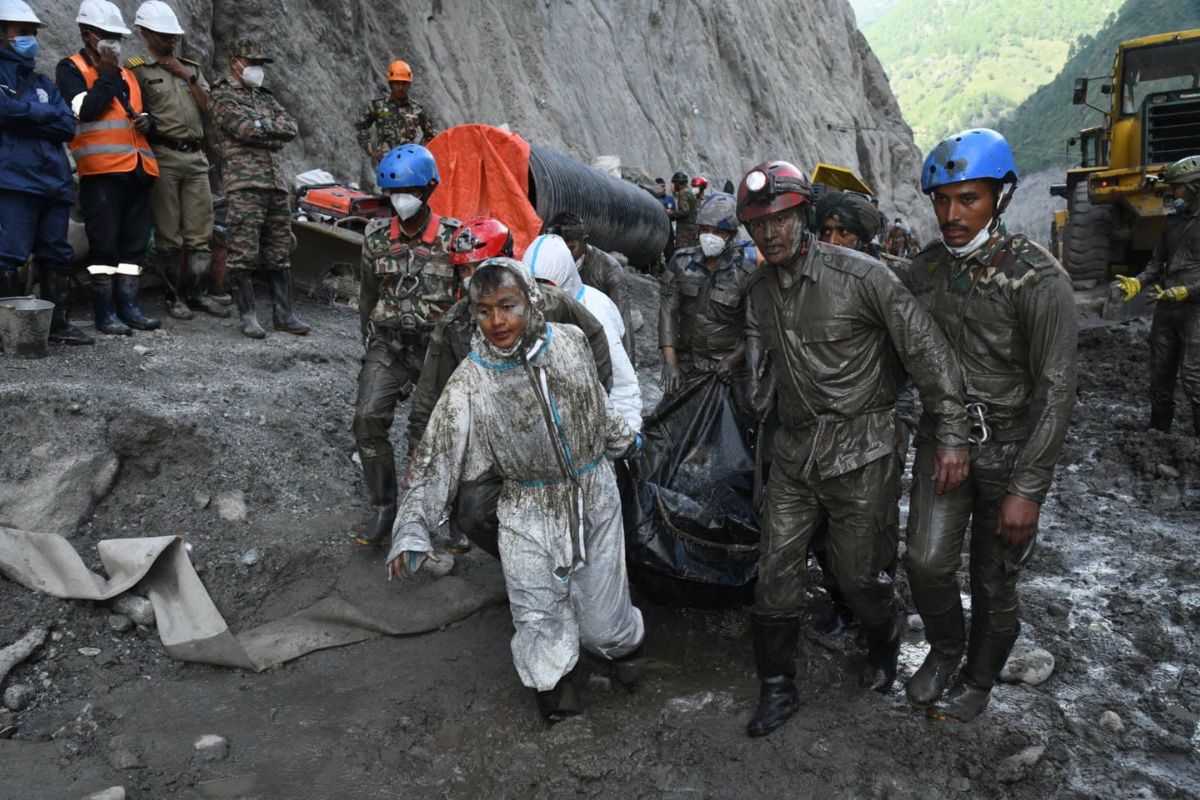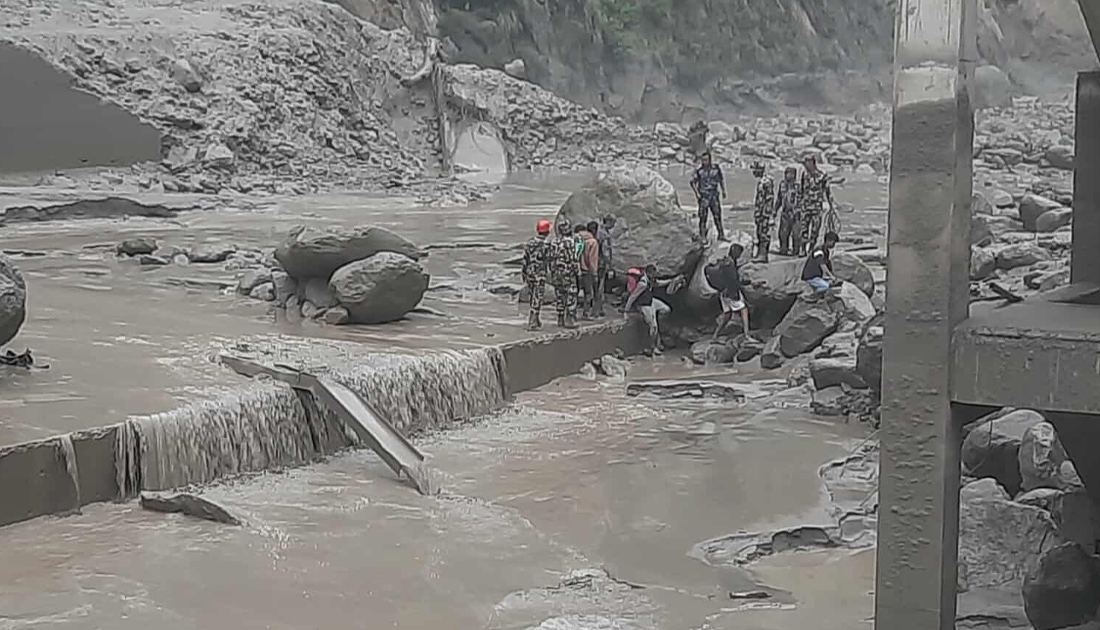





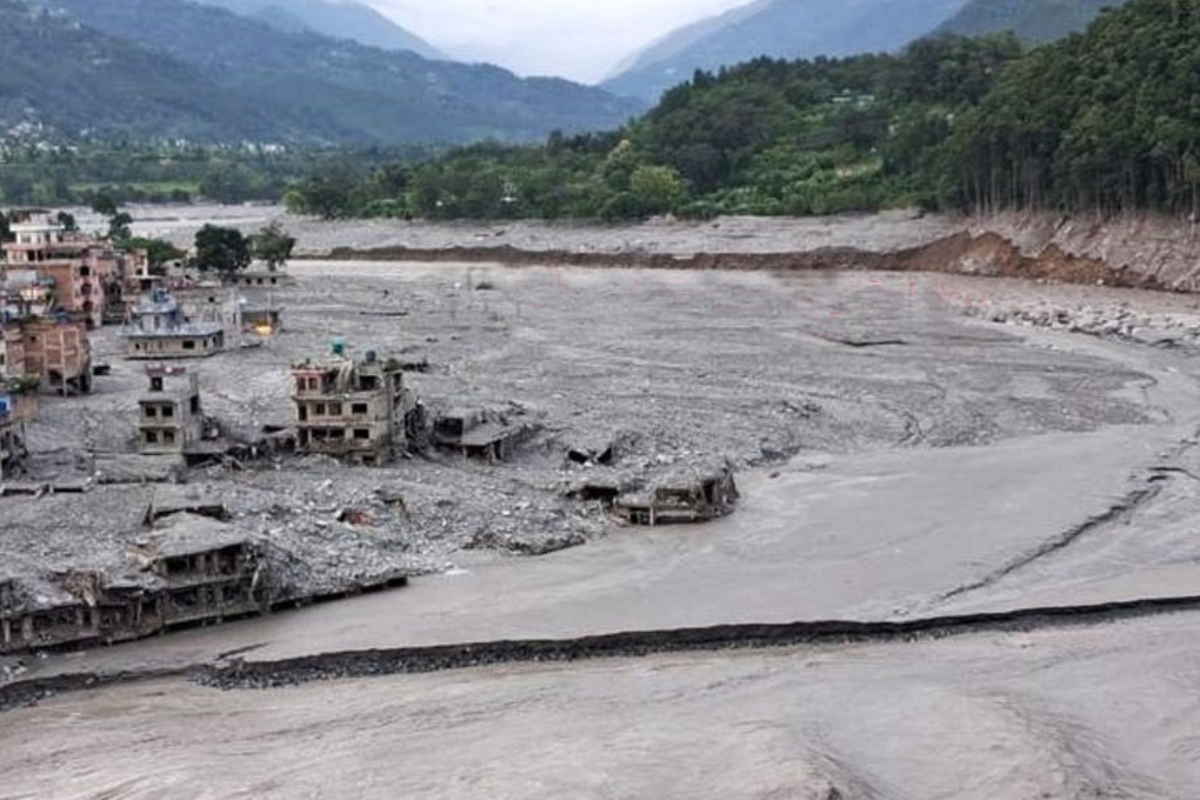
Kathmandu: The government has formed a seven-member expert committee to conduct a scientific study into the devastating flood in the Bhotekoshi River in Rasuwa and identify evidence-based causes and processes behind the disaster.
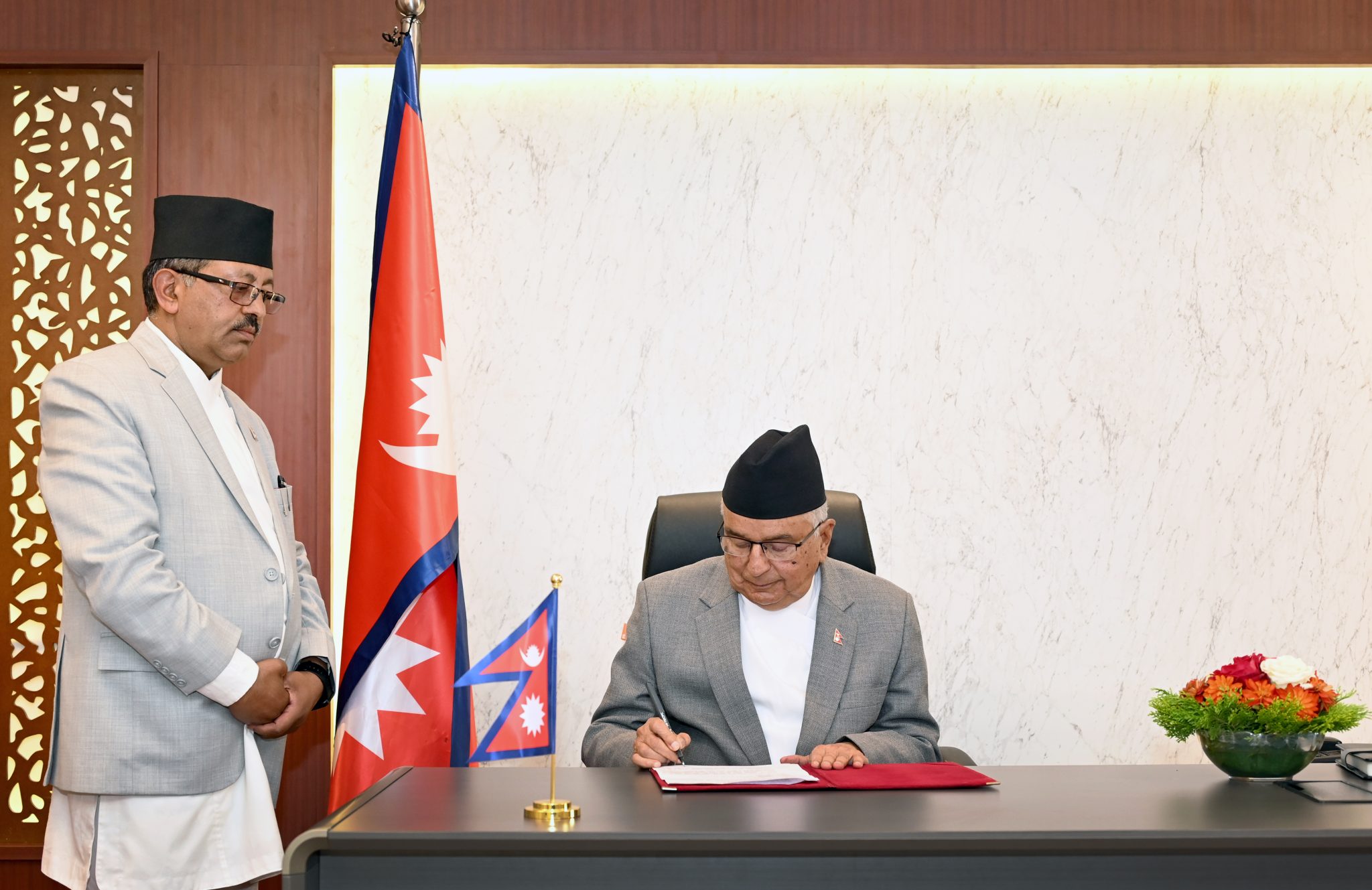
The Ministry of Energy, Water Resources and Irrigation formed the committee on Wednesday under the coordination of water policy and governance expert Debesh Belbase. The members include hydrologist Dr. Narendra Man Shakya, glaciologist Dr. Rijambahadur Kayastha, remote sensing expert Dr. Uttam Babu Shrestha, geologist Dr. Meghraj Dhital, hydropower infrastructure expert Dr. Hari Pandit and disaster risk reduction expert Anil Pokhrel.
The committee will conduct field visits from the suspected source of the flood to the downstream river corridor. The study will examine the origin and sequence of the disaster, geological and glacial hazards in the Himalayan region, hydrological processes and the possible role of climate change.
According to ministry spokesperson Mohan Kumar Shakya, the Rasuwa disaster will be studied not simply as a conventional flood or an extreme rainfall event, but as a possible cascading disaster involving a series of interconnected geological, glacial, hydrological and other hazards.
An earlier preliminary assessment by the Hydrology and Water Resources Research Center under the Water and Energy Commission Secretariat did not find sufficient scientific evidence to conclusively establish where the Rasuwa event originated, what physical process triggered it, or how the disaster spread through the Bhotekoshi–Lhende river system. The center therefore recommended a comprehensive scientific investigation before drawing conclusions about climate change as the cause.
The new study will also assess the damage to energy infrastructure and identify measures for long-term preparedness and hydropower resilience against climate change, floods, droughts and other natural hazards.
Three-Phase Study
The study will be conducted in three phases. The first phase will examine the chronology of the event and geographical damage from the high Himalayan region through the Bhotekoshi/Lhende river system and downstream areas. It will assess the relationship among glaciers, rock and soil slope instability, landslides, debris flows, river discharge and flooding.
The second phase will identify the immediate and underlying physical causes of the disaster. The third phase will assess scientifically how human-induced climate change may have influenced the likelihood or intensity of the hazards and the conditions preceding the event.
The study will use meteorological and climate data, hydrological records, glacier and cryosphere data, geological and geomorphological information, as well as remote sensing and GIS data. Field investigations will also examine rock conditions, cracks, unstable terrain, slope stability, landslide potential, river morphology and sediment movement.
Experts will also study the size, area, possible volume and weight of rock masses in the suspected source area, including how much material may have collapsed and the possible causes of the collapse.
Climate Change and Cascading Hazards
The committee will analyze rainfall, temperature, snowfall, snowmelt and climatic conditions before the disaster, along with long-term temperature and precipitation trends, extreme rainfall events, river discharge and recurrence periods.
Changes in glacier size, glacier mass balance, glacial lakes, glacial hydrology, freeze-thaw processes and permafrost conditions will also be examined to determine whether climate change contributed to creating the preconditions for the disaster and, if so, to what extent.
The study will further investigate whether the Rasuwa–Bhotekoshi disaster developed through a chain of interacting processes rather than from a single cause. These may include changes in the high Himalayan region, instability of rock or ice-rock masses, mass movement, sediment entering and moving through the river, debris-laden flows and downstream propagation.
The ministry expects the study to provide scientific evidence on the actual nature and origin of the disaster and its relationship with climate change. Its findings are also expected to support future resilient development, infrastructure planning and disaster risk reduction in the Himalayan region.
The expert committee has been given two months to complete the study.
 Dalit Identity and the Puzzle of Internal Discrimination
  Arguments For and Against Reservation
  The Reservation Debate and Social Media Discourse
  The Meaning of Reservation
 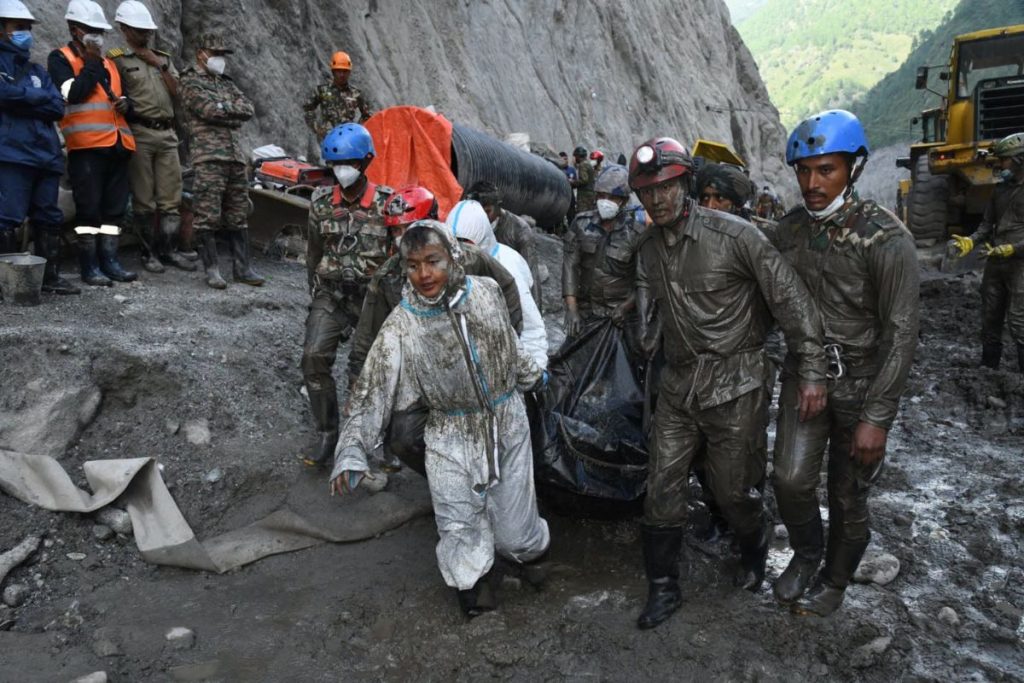 Three Bodies Found Inside Chilime Hydropower Tunnel in Rasuwa
  Law Amendment Planned to Provide Mothers Six Months of Paid Maternity Leave
 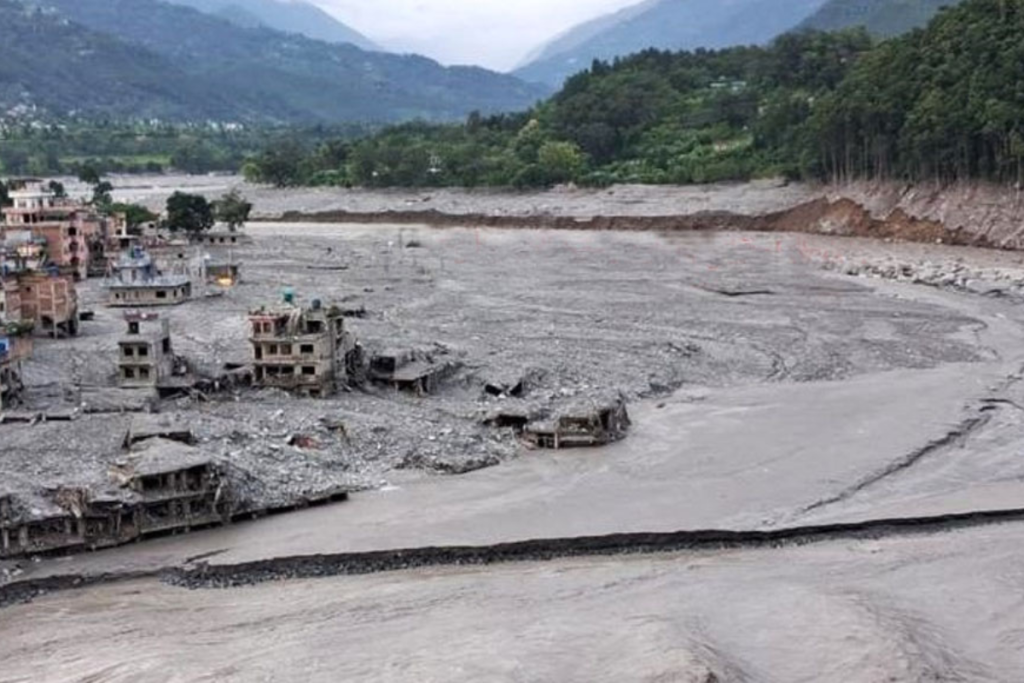 Seven-Member Expert Committee Formed for Scientific Study of Rasuwa Flood
 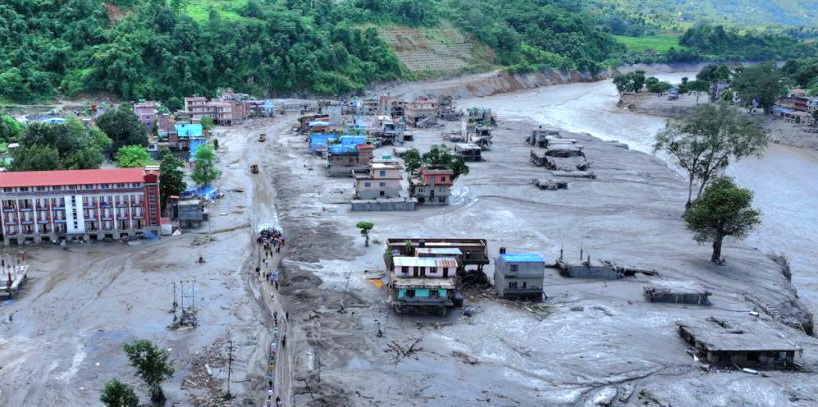 Death Toll from Bhotekoshi Floods Rises to 469
 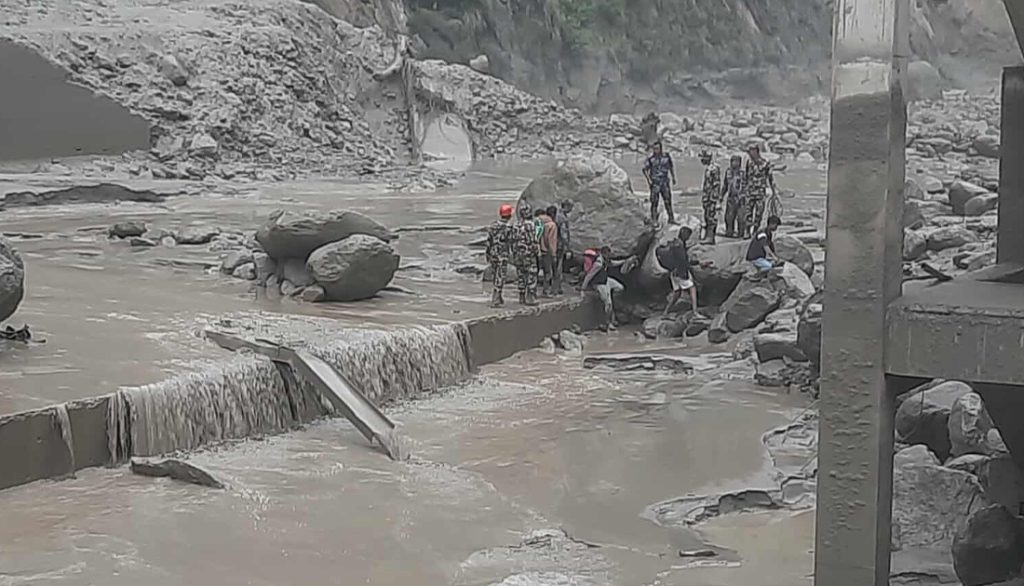 102 Bodies Recovered from Trishuli Taken to Pokhara