




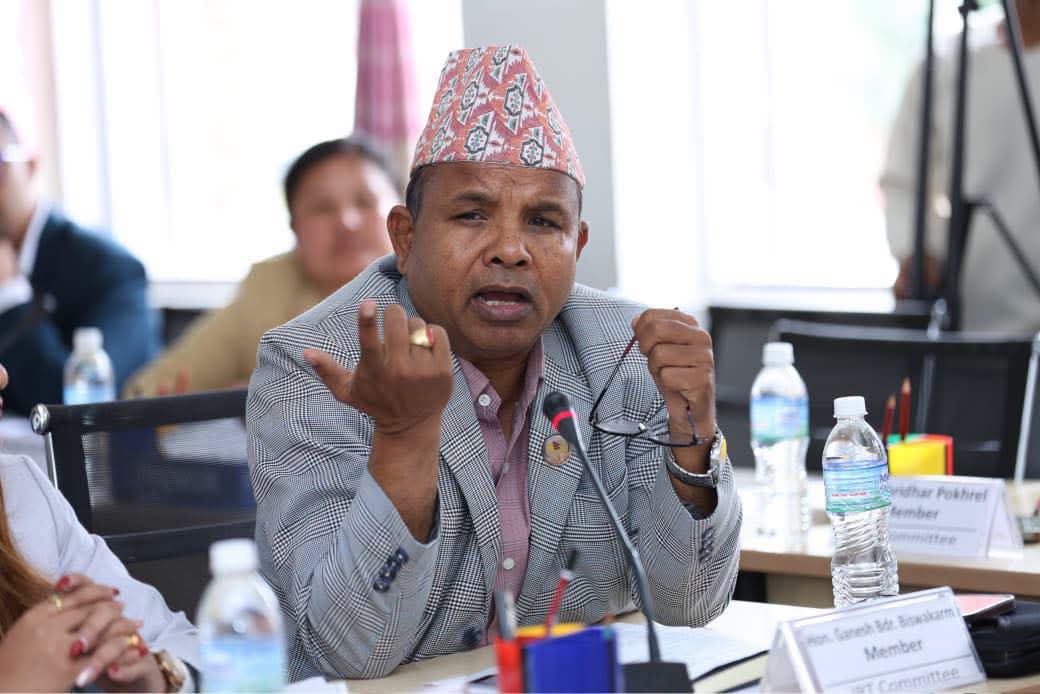
Kathmandu : Ganesh Bahadur Bishwakarma, a lawmaker from the Nepali Communist Party (CPN), has called on the government to declare a Decade for Dalit Rights.
Speaking at a meeting of the House of Representatives on Monday, Bishwakarma demanded the formulation of an integrated law addressing the spirit and provisions of Articles 24 and 40 of the Constitution, the declaration of a Decade for Dalit Rights, and the establishment of a Dalit Development Authority.
“I would like to draw the attention of the Government of Nepal, through the honorable Speaker, to implement these measures with a budget as a flagship program and place them among the government’s top priorities,” he said.
Bishwakarma recalled that the Caste-Based Discrimination and Untouchability (Offence and Punishment) Act, 2068 BS was introduced when Jhalanath Khanal was prime minister.
He also pointed to several initiatives taken by successive governments. “When Baburam Bhattarai was prime minister, a high-level mechanism was formed to promote Dalit rights. When Pushpa Kamal Dahal ‘Prachanda’ was prime minister, the government announced the formation of a Dalit Development Authority along with inclusion across all sectors. And when Balendra Shah was prime minister, an apology by the chair of the ruling Rastriya Swatantra Party regarding Dalits was also significant,” he said.
Despite these developments, he said, the reality remains that the problems faced by Dalit communities have not been resolved.
Bishwakarma said special programs should be implemented to address, simultaneously, the multidimensional poverty, structural exclusion and landlessness faced by Dalits, who account for roughly one-fourth of Nepal’s population, across political, economic and social spheres.
He also noted that although declarations have been made to abolish various forms of bonded and forced labor—including the liberation of Kamaiyas on July 18, 2000, Kamlaris on May 24, 2013, Haliyas on September 6, 2008, and Haruwa-Charuwas on July 18, 2022—their rehabilitation has yet to be fully completed.
Against the backdrop of Parliament having ratified the international convention on forced labour, he called for rehabilitation programs to be completed by 2030 and for Nepal to establish its identity as a country free from bonded labor.
“Likewise, I call for a concrete plan based on national consensus, with ownership by the rights-holders, to permanently resolve the problems of Dalits, landless people, landless squatters and unorganized settlers. I also urge the government to hold talks with the microfinance victims involved in the Kathmandu-centered movement and resolve their problems,” he said.
Bishwakarma further said that he had been drawing attention for 68 days to have a controversial statement made by the prime minister removed from the parliamentary record, but that no action had been taken.
He described this as behavior by the prime minister that was inconsistent with parliamentary norms. He also said it was serious and embarrassing that ruling-party lawmakers had openly defended what he described as the prime minister’s “anti-national” statement in Parliament.
“I do not believe the prime minister considers the border issue involving Susta and the disputes concerning Kalapani, Lipulekh and Limpiyadhura as one and the same matter. Therefore, I request a high-level initiative to resolve these issues through discussions among the leaders of all political parties represented in Parliament,” he said.
 Dalit Identity and the Puzzle of Internal Discrimination
  Arguments For and Against Reservation
  The Reservation Debate and Social Media Discourse
  The Meaning of Reservation
  Pradip Pariyar Asks: Why Doesn’t the Pain of Hiralal Paswan Move Us ?
 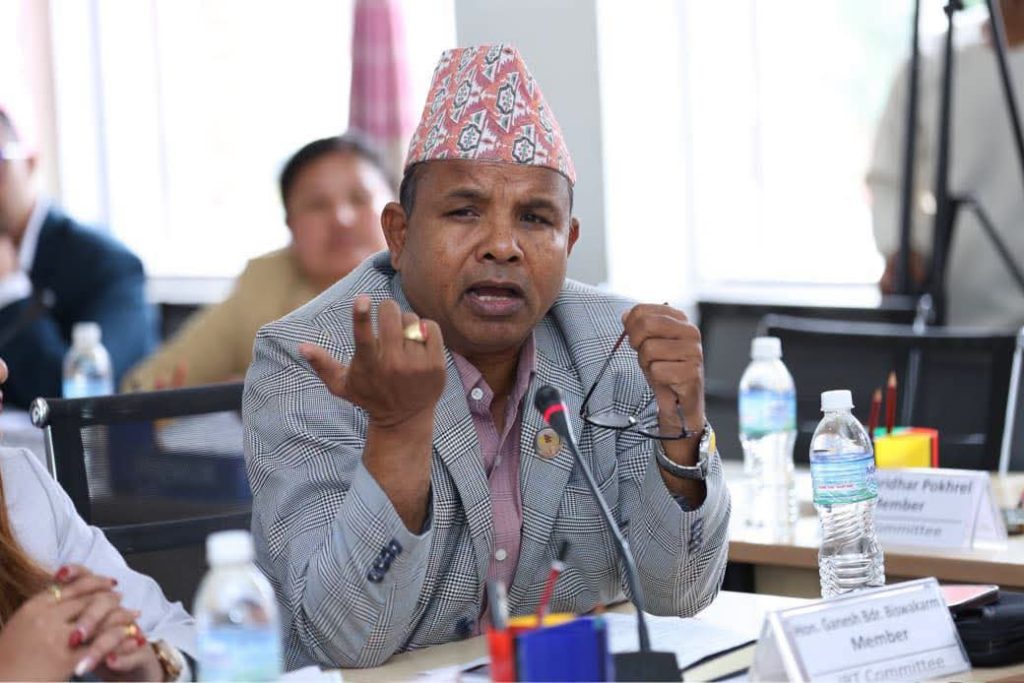 CPN MP Bishwakarma Calls for Declaration of Decade for Dalit Rights
 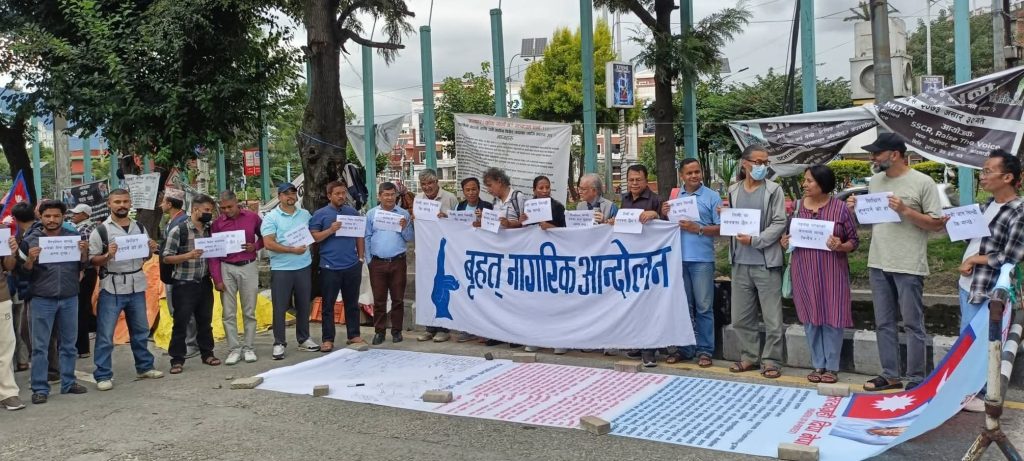 Why Do Dalits Still Face Caste Discrimination in Kathmandu ?
 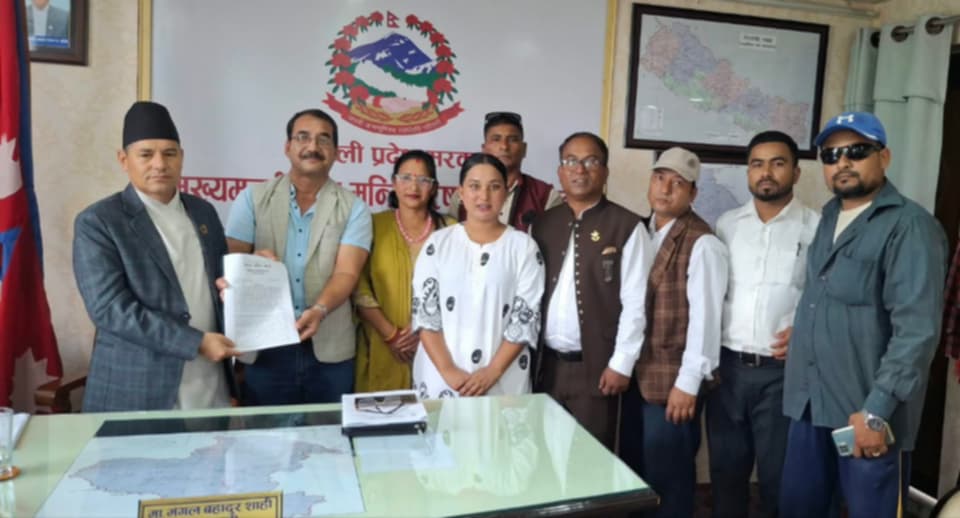 Karnali CM Pledges Amendment to Dalit Act
 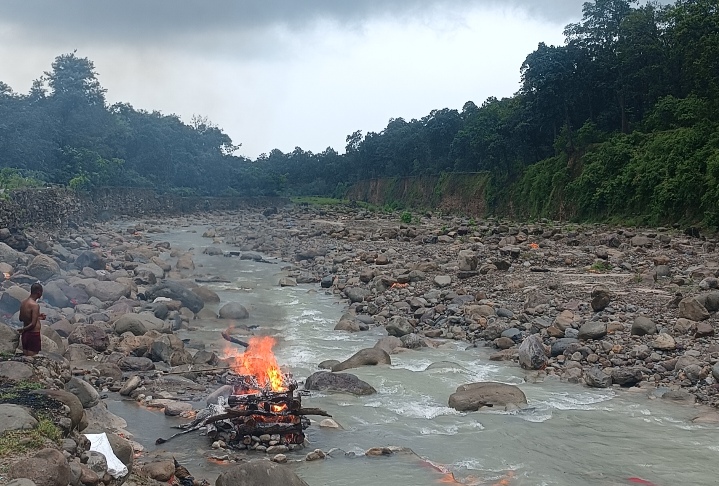 A Powerful Message Against Caste Discrimination: A Chhetri Man Carries a Dalit’s Coffin