




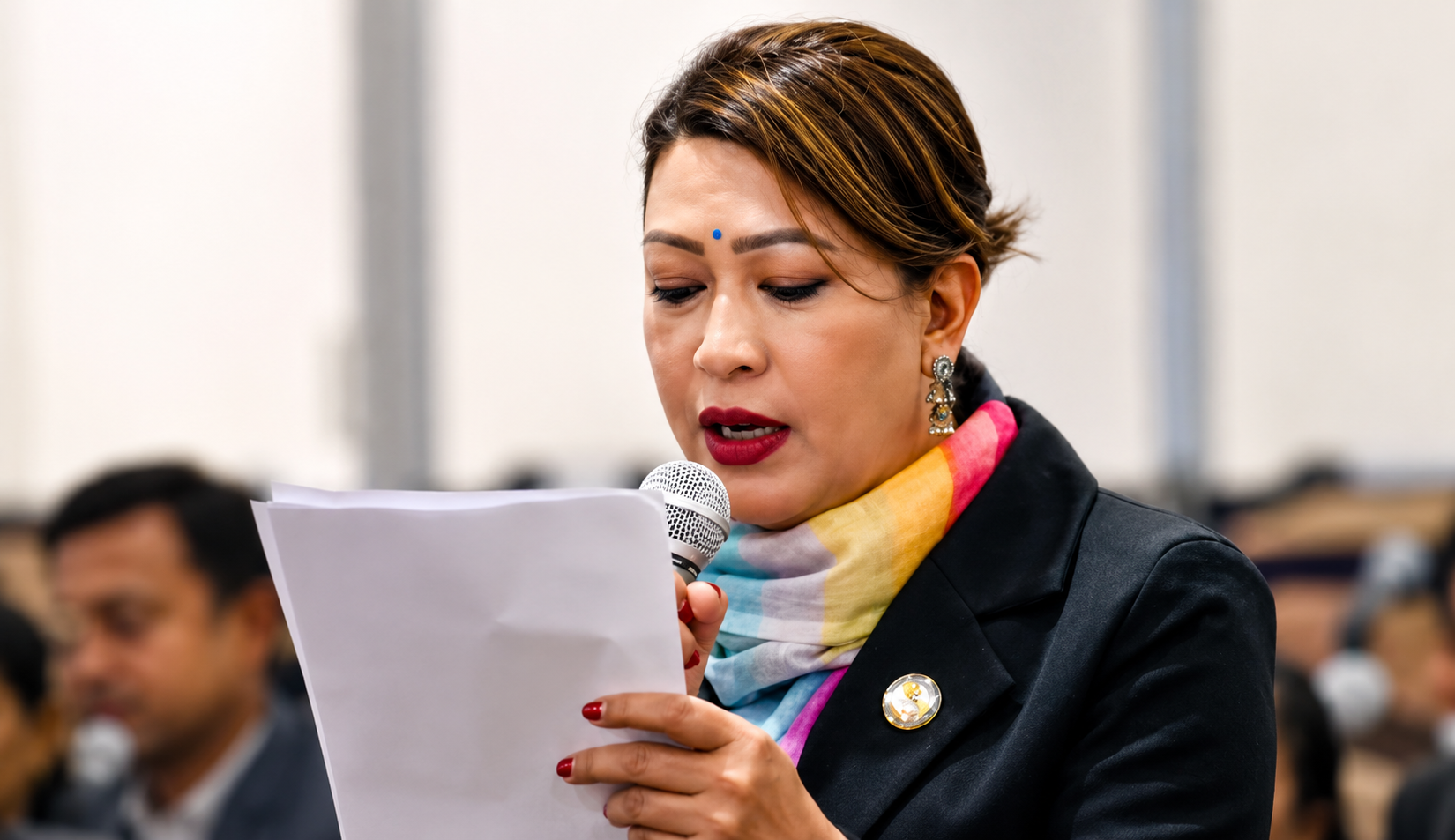
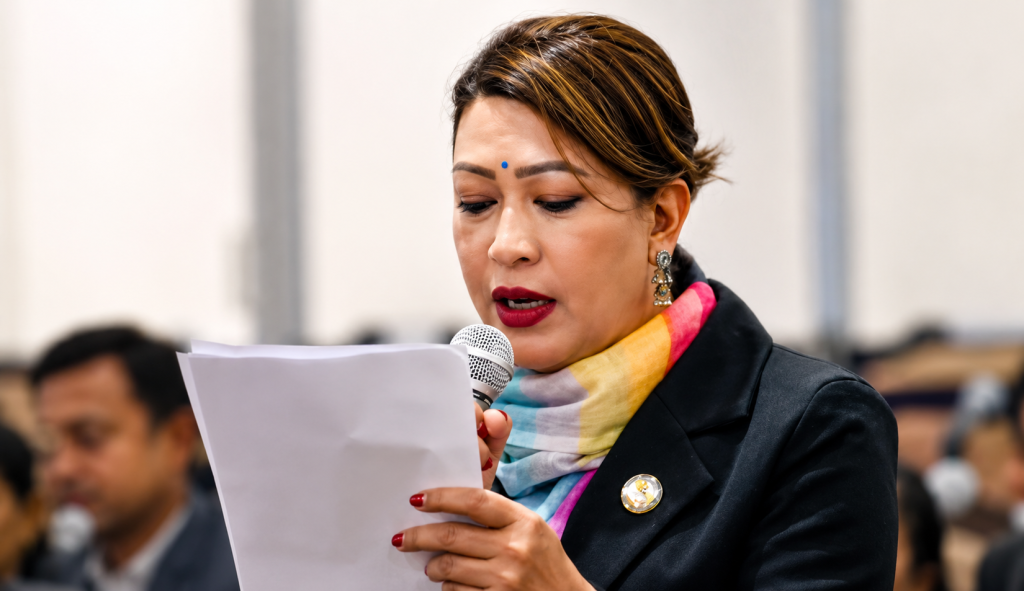
Kathmandu : Rastriya Swatantra Party (RSP) MP Bhumika Shrestha has objected to the use of the term “third gender”, saying that more inclusive and specific terminology such as “gender minorities” should be used in official discussions.
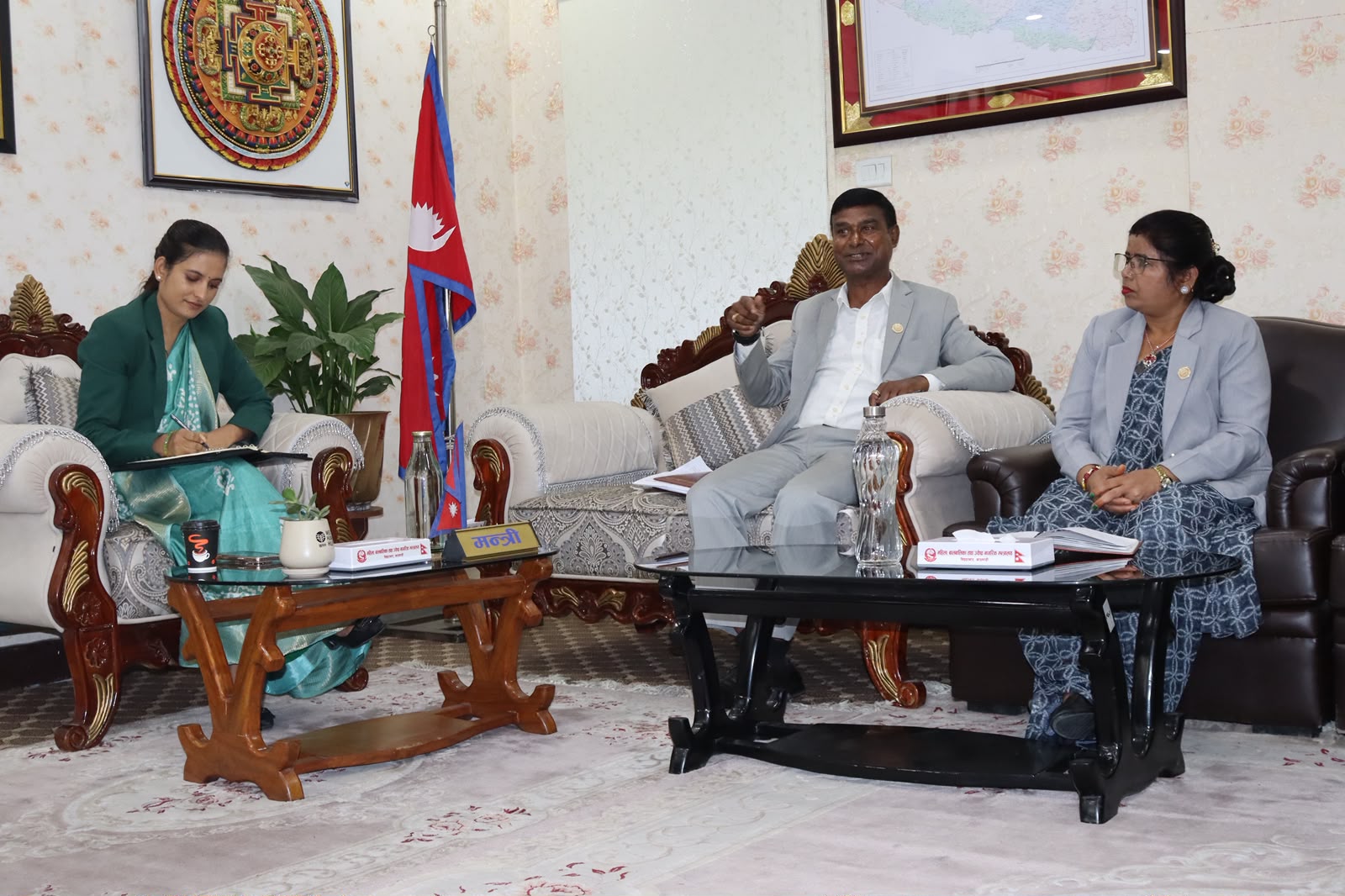
Speaking at a meeting of the parliamentary Law, Justice and Human Rights Committee, Shrestha said she wanted to clarify the terminology used by the Inspector General of Police and the Home Secretary.
She said the use of the term was not inherently prohibited but argued that, in the context of contemporary discussions on inclusion, terms referring to gender minorities could be used instead.
Committee chairperson Samikshya Baskota, meanwhile, stressed that freedom of expression should not infringe on another person’s privacy or dignity. She said freedom of expression and the right to privacy are complementary rights and that language and conduct should respect both.
Shrestha’s comments have triggered debate among members and advocates of Nepal’s gender and sexual minority communities. Some have questioned whether rejecting the term “third gender” could undermine the identity and long-running rights movement of people who continue to use that identity.
Shrestha has a long history of activism on gender and sexual minority rights. She previously published an autobiography titled Bhumika: An Autobiography of a Third-Gender Person and has worked for years on legal recognition and rights issues affecting the community. Public records and reporting also document that she has held “Male”, “Other” and later “Female” gender markers on citizenship documents at different stages.
The debate comes amid continuing disagreements over terminology and legal gender recognition in Nepal. Rights advocates have argued that umbrella terms such as “third gender” or “gender and sexual minorities” do not necessarily capture the distinct experiences of transgender, intersex and other communities. A recent Kathmandu Post interview with Shrestha’s office also highlighted the importance of using specific terminology for different groups.
Nepal’s Supreme Court established important legal protections for gender and sexual minorities through its 2007 landmark ruling, while subsequent legal and administrative measures introduced gender markers including “Other.” Rights groups continue to call for clearer and more accessible procedures for legal gender recognition.
The controversy has therefore brought renewed attention to a broader question: how Nepal should balance self-identification, legal recognition, inclusive terminology and the rights of different gender and sexual minority communities.
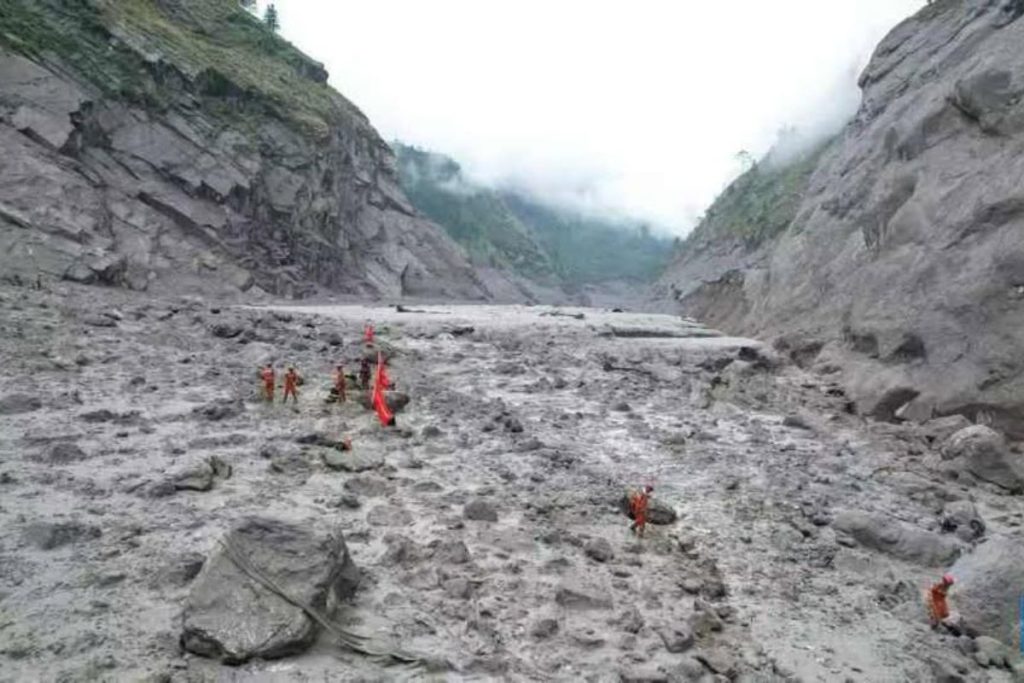 DNA Samples to Be Collected From Families of Missing Foreign Nationals
  Dalit Identity and the Puzzle of Internal Discrimination
  Arguments For and Against Reservation
  The Reservation Debate and Social Media Discourse
  RSP MP Bhumika Shrestha Objects to Use of ‘Third Gender’ Term