





The government’s decision to cut funding for public welfare advertising has once again pushed Nepal’s print journalism into a serious crisis. For the government, it may appear to be an ordinary decision related to budget management, administrative priorities or expenditure reduction. But for the print media, it is not simply a matter of reducing a budget heading. It is closely linked to the employment of thousands of journalists and media workers, the survival of small and medium-sized self-employed publications, the state’s system of delivering public information to citizens and, ultimately, media pluralism in a democracy.
The most important fact the government must understand is this: public welfare advertising is not a favor granted to journalists by any government, minister or political party. It is an established system of public information dissemination that has evolved over seven decades. Its early foundation can be traced to recommendations made by the Press Commission formed in 2015 BS for the development of journalism. Government records indicate that after a system was introduced to certify newspaper representatives, public welfare advertising for newspapers began in 2016 BS.
The social, political and communication environment at that time was completely different from today. Radio access was limited. Television was not within the reach of the general public, while digital communication was beyond imagination. Newspapers were the primary means of delivering state information, public awareness messages, government decisions and issues of public concern to citizens.
In other words, the system through which the state used print media to fulfill its responsibility of informing citizens was established decades ago. Therefore, interpreting public welfare advertising simply as “money given by the government to the media” today disregards history, policy and the state’s public responsibility.
The question is straightforward: if the government publishes its policies, decisions, notices, public calls and citizen-related messages through the media, how can the cost of doing so be described as government charity to the media?
The fundamental purpose of public welfare advertising is not to donate money to journalists but to inform citizens. The state uses media to provide information on health, education, public services, citizens’ rights, social awareness, government programs, legal provisions and matters of public interest. Once such information is published, payment made according to established standards and procedures represents the cost of the information-publication service purchased by the state. Describing it as a subsidy or favor is fundamentally misleading.
The system itself evolved over time. Following the Press Council Act, 2048 BS, legal mechanisms concerning the circulation audit and classification of newspapers were developed. The classification of newspapers was not merely an exercise in issuing certificates. It also sought to identify genuine and responsible publications based on criteria such as regular publication, circulation, content, originality and the nature of the publication.
According to records of the Press Council Nepal, the first newspaper classification criteria were formulated and implemented in 2055 BS. This further strengthened the basis for linking the distribution of government and public welfare advertising with the actual condition and public role of media outlets.
In 2069 BS, the “Directive on the Proportional Distribution System of Information and Advertising” was introduced. Its underlying principle was that government information and advertising should not remain concentrated among only a few large media houses and that media diversity should be maintained.
In a democracy, a strong information system cannot be built simply by strengthening a few large media organizations. Local, provincial, national and self-employed small and medium-sized print outlets raise different voices, local problems and issues of public concern. Weakening such outlets means weakening both diversity in information flow and citizens’ access to information.
The year 2076 BS marked another important turning point in the history of public welfare advertising. According to publications of the Press Council Nepal, the old system of providing assistance for the purchase of newsprint remained in place until around 2075/76 BS after the restoration of the multiparty system. Subsequently, newspapers included in the classification system began publishing public welfare advertisements, submitting bills and supporting documents, and receiving payments through the prescribed process. The system has reportedly continued since Shrawan 2076 BS.
This formed the basis of the system that exists today. Therefore, newspapers that are publishing regularly are not simply asking the government to “give money if it wants to.” They publish public information, complete the required procedures, submit bills and evidence, and receive payment according to the system established by the state.
Following the Advertising (Regulation) Act, 2076 BS, an institutional structure was established through the Advertising Board to regulate the advertising sector. The board subsequently became an important institution for managing public welfare advertising. Procedures for publishing public welfare advertisements in print media were issued in 2080 BS, followed by another set of procedures in 2082 BS.
This raises an even more serious question for the government. The state itself makes the laws and procedures, classifies publications, provides advertisements, asks for bills and supporting documents, and establishes a system for making payments through prescribed procedures. If it cuts the funding of that very system when a crisis emerges, can the state that created the policy simply walk away from its financial responsibility?
If there are weaknesses in the system, improve it.
If there are irregularities, investigate them.
If some publications are receiving benefits by falsely claiming circulation or publication, stop that practice. But using a few problematic practices as a pretext to collectively penalize genuine print outlets that publish regularly, employ journalists and media workers, and provide information to citizens cannot be considered a fair policy.
Nepal’s print journalism is already under severe financial pressure. The advertising market is limited. The expansion of digital media has reduced the traditional advertising market. The costs of paper, printing, transportation and distribution continue to rise. The slowdown in economic activity has reduced the advertising capacity of the private sector. Social media and digital platforms have captured a significant share of the advertising market.
In such circumstances, the state does not need to become a substitute for private-sector commercial advertising. But it cannot simply reduce the cost of publishing public information that the state itself is responsible for delivering to citizens.
An even more serious concern is that the Press Council Nepal itself has raised the issue of the crisis facing print media at various times. At a time when the Council has pointed to the financial pressures on print journalism caused by the expansion of social media, natural disasters, pandemics and the changing media environment, and has even recommended increasing public welfare advertising, the government’s decision to move in the opposite direction raises further questions about its rationale.
Why cut spending on a system that has been providing public information to citizens for seven decades?
If the government cites a budget shortage, questions must be asked. Why has the cost of delivering government information to citizens become the first target for cuts? When there are other areas of state expenditure where austerity could be considered, why target the infrastructure of public information itself?
The impact of cutting public welfare advertising will not be limited to publishers’ bank accounts. It will directly affect the employment of journalists and media workers. Businesses involved in press operations, paper supply, printing, distribution and transportation will also be affected. The information network from local to national levels will weaken. The risk of self-employed publications shutting down will increase.
Ultimately, media pluralism in a democracy will be affected.
Therefore, presenting this dispute as a matter of “newspapers asking the government for money” is simply an easy way of avoiding the real issue.
In a democracy, the press is not a customer of the government; it is a watchdog. The press questions government decisions, examines public spending, exposes corruption, irregularities and policy weaknesses, and brings citizens’ grievances into the public sphere. A strong democracy cannot be imagined by economically weakening the very press that performs these functions.
The government does not provide public welfare advertising so that the media will write in its favor. It provides such advertising so that citizens can receive information about government policies, decisions and public messages.
Failure to understand this fundamental distinction has pushed the current debate in the wrong direction.
If the government cuts public welfare advertising, another serious question arises: how will government information reach citizens?
Does the state now believe that government information can reach everyone through social media alone?
If so, the government must move beyond the assumption that every citizen has equal digital access. Digital access has undoubtedly expanded, but the credibility, archival value and local reach of print media have not disappeared.
Local and self-employed publications, in particular, continue to provide information to citizens in places where large media houses may have limited reach. Weakening the survival of such publications is therefore not merely an attack on the businesses of a few publishers; it is also an attack on the local information system.
The debate should no longer be about whether public welfare advertising should exist. The real debate should be about how to make the system more transparent, proportional, effective and sustainable.
The state must stop irregularities, but it must not punish genuine publications.
Classification should be made more scientific, but the classification system should not be used to economically eliminate self-employed media outlets.
Distribution should be made transparent, but the system should not be centralized in a way that benefits only large media organizations.
The system can be restructured based on actual publication, regularity, circulation, the number of journalists and employees, local reach and contribution to public information dissemination. Digital verification, transparent records and effective monitoring mechanisms can be developed. Administrative costs and unnecessary procedural burdens within the Advertising Board can also be reduced.
But cutting the fundamental cost of publishing public information will not improve the system.
The system that began in 2016 BS has now completed seven decades. Political systems have changed, governments have changed, technology has changed and the nature of communication has changed. Communication has moved from newspapers to radio and television and now to the digital era.
But one fundamental need has not changed: the need for the state to remain connected with citizens through information.
Therefore, the central question today is not whether public welfare advertising is a state charity. History answered that question long ago.
It is a system created by the state to deliver public information to citizens.
The government can improve the system, prevent irregularities, increase transparency and make classification more scientific. But democracy cannot be strengthened by economically weakening a public information structure that has evolved over seven decades.
The government needs to understand one simple point: public welfare advertising is not a donation to journalism; it is an expenditure incurred by the state to inform its citizens.
Cutting that funding does not merely reduce media income. It weakens the state’s own responsibility to ensure that public information reaches citizens.
The fourth estate cannot be weakened while expecting the other three branches of the state to become stronger.
An independent press is not a burden on the state. It is public infrastructure that helps hold the state accountable to its citizens.
Seven decades later, the government should not attempt to reverse history. It should have the courage to reform the system.
Instead of cutting public welfare advertising, the need of the hour is to control irregularities, ensure transparent distribution, establish scientific classification and provide fair protection to genuine media outlets.
Because the real question is not simply how much money some newspapers receive. The fundamental question is: how much value does the government place on citizens’ right to receive information from the state?
7 Direct Questions to the Government
How did a system used to deliver public information to citizens since 2016 BS suddenly become a burden on the state?
If the government publishes its own information through newspapers, why is the cost being described as a “subsidy to the media”?
If there are irregular publications, should the government punish those responsible or cut advertising for genuine and regularly operating publications as well?
What is the basis for cutting public welfare advertising when print journalism is already facing a serious financial crisis?
Why is the government moving in the opposite direction when the Press Council Nepal has recommended increasing public welfare advertising?
When local, self-employed and small and medium-sized print outlets are weakened, how will citizens’ access to local information and media pluralism be protected?
If the government’s real objective is to control irregularities, why not reform the system instead of making funding cuts the first response?
(The author is the editor of Bohora Arth Sawal Weekly and secretary of the Federation of Nepali Journalists, Kathmandu chapter.)
 Arguments For and Against Reservation
  The Reservation Debate and Social Media Discourse
 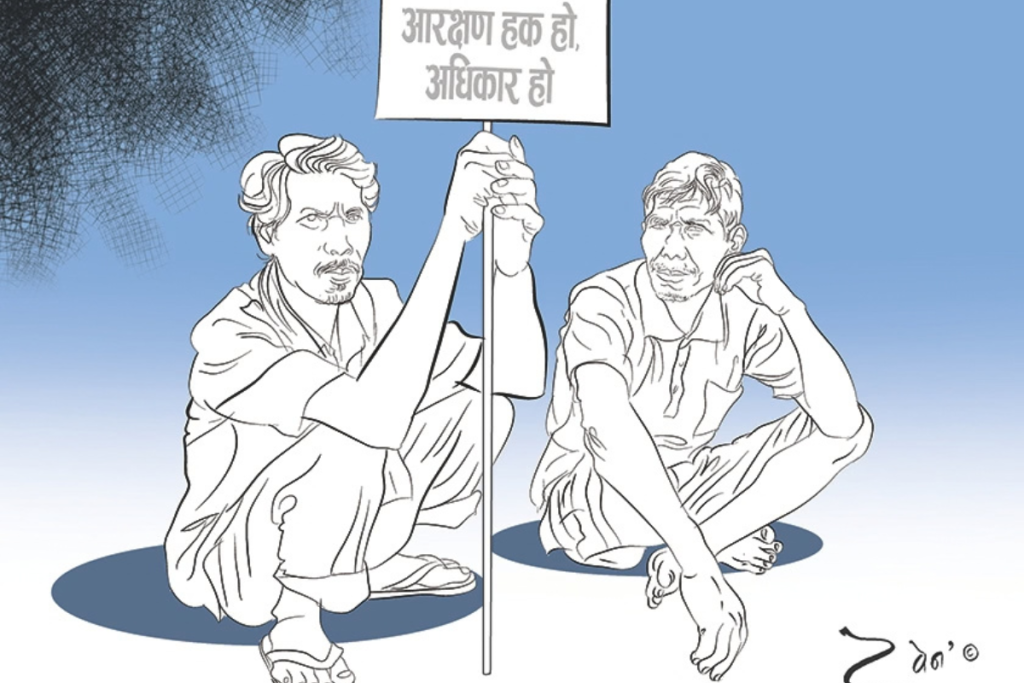 The Meaning of Reservation
 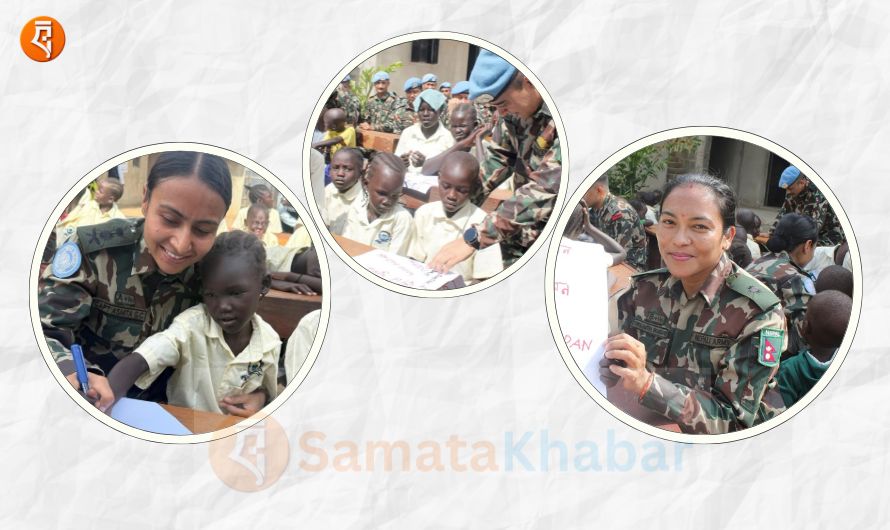 Creative Initiative by Nepali Peacekeepers in South Sudan
 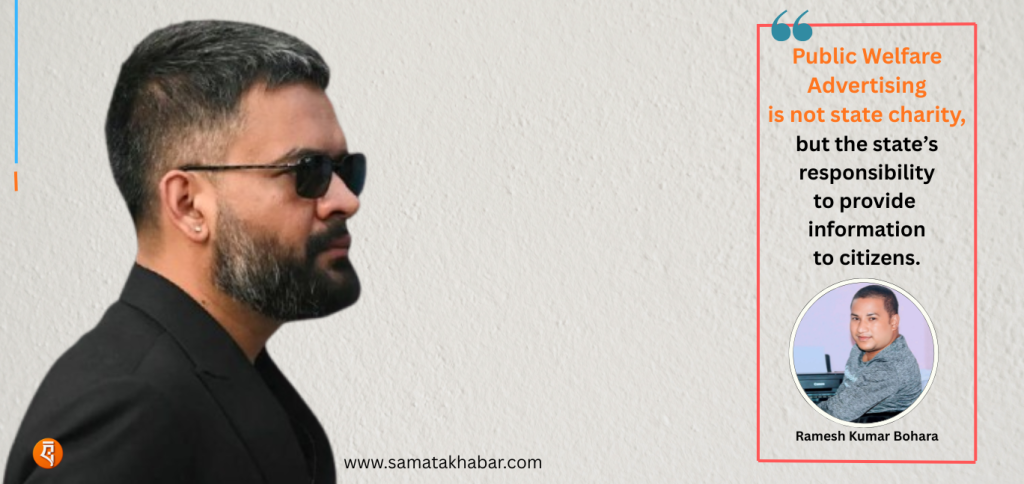 ‘Public Welfare Advertising Is Not a State Charity’
  ‘Dalbir Singh Sunar: The Scientist from Surkhet Forgotten by History’
 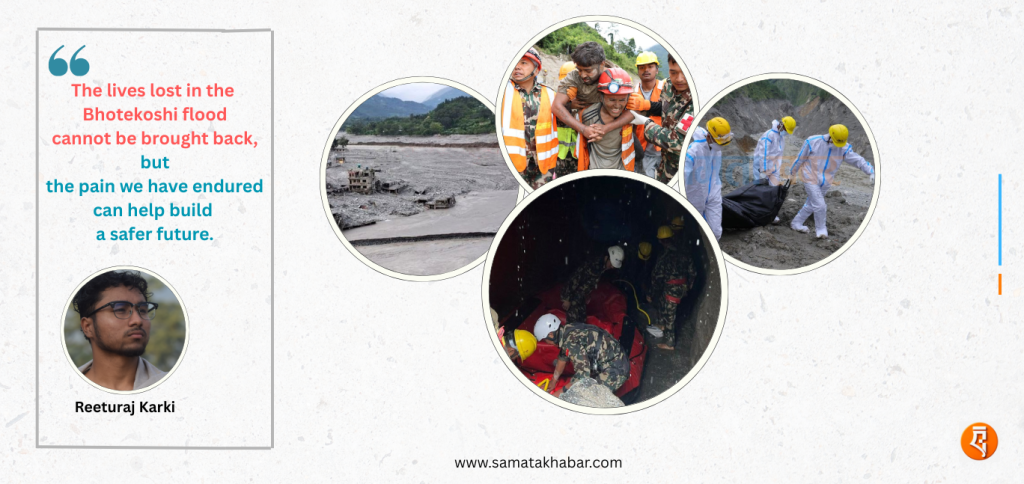 May Such a Disaster Never Happen Again!